Mobility · Senior dogs
Best Dog Ramps for Older Dogs UK
Looking for the best dog ramps for beds, sofas and cars? This guide compares practical dog ramps in the UK, including indoor dog ramp options and dog ramps for cars. A dog ramp for bed, a dog ramp for sofa or a dog ramp for car can help some older and senior dogs reach furniture or vehicles more easily, but the best dog ramp depends on your dog’s size, confidence, mobility, grip, ramp angle and the height being reached.
Start here
Who this guide is for
This guide is for you if your older dog hesitates before jumping, struggles to reach the sofa or bed, slips when climbing, or needs help getting into the car. A ramp will not solve every mobility problem, but the right one can make daily movement easier and reduce repeated impact from jumping.
- Your dog avoids jumping onto the sofa
- Your dog struggles with the back of the car
- Your dog slips or hesitates on steps
- You want a gentler option than repeated jumping
Quick answer
For most older dogs, the best dog ramp is stable, wide enough for confident walking, has a non-slip surface and creates a gentle incline. The right pick depends on whether you need a dog ramp for bed, a dog ramp for sofa or a dog ramp for car — each has different length, height and portability needs.
- Best overall type
- A wide, non-slip ramp with a gentle incline and stable base.
- Best for cars
- A foldable ramp that is light to lift and grippy in wet weather.
- Best for sofas
- A compact indoor ramp with a small footprint and steady frame.
- Best for larger dogs
- A wider, heavy-duty ramp with strong weight capacity.
- Best for nervous dogs
- An extra-wide ramp with high grip to build confidence slowly.
At a glance
Our shortlist
Quick picks for the situations most owners ask about.
Best overall
A stable, non-slip ramp with a gentle incline
Wide enough to walk on confidently and long enough to keep the slope easy on joints.
Best for cars
A foldable ramp with strong weight capacity
Light enough to lift in and out of the boot, with a textured surface for wet weather.
Best for sofas
A compact indoor ramp
Short footprint that fits beside a sofa or low bed without dominating the room.
Best for nervous dogs
A wider ramp with a grippy surface
Extra width and reassuring grip help hesitant dogs build confidence.
Best for larger dogs
A wider, heavy-duty ramp
Higher weight capacity and a generous walking surface for bigger breeds.
Compare
Side-by-side comparison
A calm overview — no fake ratings, no fake prices.
| Product | Best for | Ramp type | Key feature | Things to check | Where to buy |
|---|---|---|---|---|---|
| iPetba Dog Ramp for Bed & Couch for Large Dogs | Indoor beds and sofas | Adjustable wooden ramp | Wide adjustable design | Floor grip and furniture height | View on Amazon |
| CO-Z 160cm Foldable Dog Car Ramp | Cars and boots | Foldable aluminium ramp | Portable car access | Vehicle height and lift weight | View on Amazon |
| SweetBin Dog Ramp for Bed / Couch | Compact sofa and bed use | Foldable adjustable wooden ramp | Multiple height settings | Room space and incline | View on Amazon |
| Snagle Paw Longest 180cm Dog Car Ramp | Large dogs and SUVs | Extra-long foldable aluminium ramp | Longer, wider vehicle access | Storage space and ramp weight | View on Amazon |
| CJYMMFAN 180cm Extra-Wide Folding Dog Car Ramp | Nervous or hesitant dogs | Extra-wide folding aluminium ramp | Wider walking surface | Width, storage and handling | View on Amazon |
iPetba Dog Ramp for Bed & Couch for Large Dogs
- Best for
- Indoor beds and sofas
- Ramp type
- Adjustable wooden ramp
- Key feature
- Wide adjustable design
- Things to check
- Floor grip and furniture height
CO-Z 160cm Foldable Dog Car Ramp
- Best for
- Cars and boots
- Ramp type
- Foldable aluminium ramp
- Key feature
- Portable car access
- Things to check
- Vehicle height and lift weight
SweetBin Dog Ramp for Bed / Couch
- Best for
- Compact sofa and bed use
- Ramp type
- Foldable adjustable wooden ramp
- Key feature
- Multiple height settings
- Things to check
- Room space and incline
Snagle Paw Longest 180cm Dog Car Ramp
- Best for
- Large dogs and SUVs
- Ramp type
- Extra-long foldable aluminium ramp
- Key feature
- Longer, wider vehicle access
- Things to check
- Storage space and ramp weight
CJYMMFAN 180cm Extra-Wide Folding Dog Car Ramp
- Best for
- Nervous or hesitant dogs
- Ramp type
- Extra-wide folding aluminium ramp
- Key feature
- Wider walking surface
- Things to check
- Width, storage and handling
In detail
Recommended options
What each product is good at, and where it falls short.
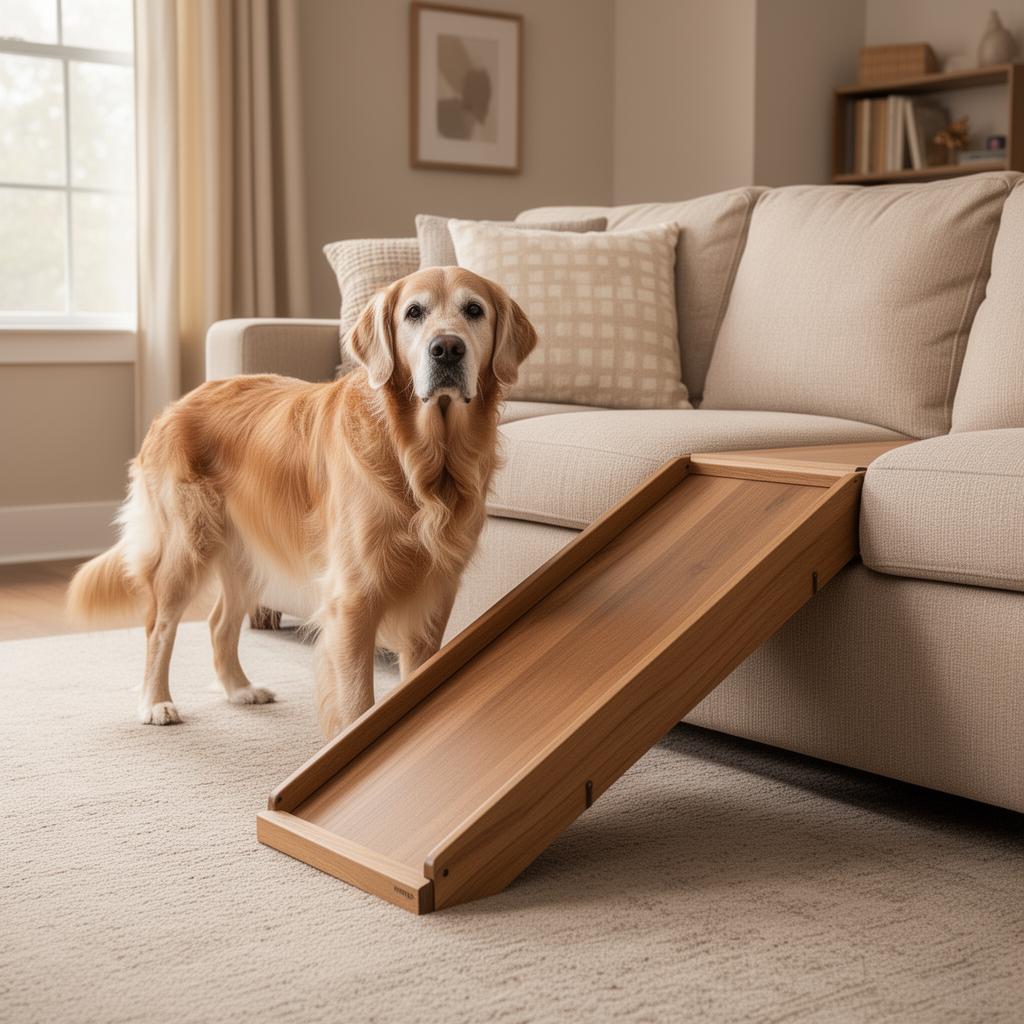
To avoid showing outdated or incorrect product photos, we send you to Amazon for the latest images, details and availability.
Best indoor ramp for beds and sofas
iPetba Dog Ramp for Bed & Couch for Large Dogs
A wide adjustable indoor dog ramp for older dogs that need help reaching a bed or sofa without jumping. As a dog ramp for bed or sofa use, its extra-wide walking surface, grippy surface and adjustable height make it a strong indoor option, especially where a fixed-height ramp would not fit well.
- Use case
- Indoor · bed or sofa
- Type
- Adjustable wooden ramp
- Check first
- Floor grip, available space and the height setting your dog needs
Pros
- Adjustable height for beds, sofas and other furniture
- Extra-wide walking surface for better confidence
- Anti-slip surface with grooves and crossbars
- Solid wood-style construction
- Suitable for many medium and larger dogs
Cons
- May still need a rug or mat underneath on smooth floors
- Not the smallest option for tight rooms
- Some dogs may need slow training before using it confidently
Best for cars and boots
CO-Z 160cm Foldable Dog Car Ramp
A foldable aluminium dog car ramp for helping older dogs get into cars, SUVs and boots without repeated jumping. As a dog ramp for car access, its 160cm length creates a gentler angle than short ramps, though it is more suitable for vehicles than small indoor spaces.
- Use case
- Outdoor · car or SUV
- Type
- Foldable aluminium ramp
- Check first
- Lift weight, car boot height and wet-weather grip
Pros
- Foldable for boot storage
- Useful for car and SUV access
- Non-slip surface for better paw grip
- Helps reduce repeated jumping
- Suitable for many medium and larger dogs
Cons
- May feel heavy for some owners
- Mainly suited to vehicles and outdoor use
- Still needs gentle training for nervous dogs
Best compact ramp for sofas and beds
SweetBin Dog Ramp for Bed / Couch
A foldable adjustable wooden indoor dog ramp for older and senior dogs that need a gentler way to reach a sofa or bed. Its multiple height settings make it useful as both a pet ramp for sofa and a dog ramp for bed at different furniture heights, while the carpeted surface and crossbars help with paw grip.
- Use case
- Indoor · sofa or bed
- Type
- Foldable adjustable wooden ramp
- Check first
- Chosen size, room space and incline at your furniture height
Pros
- Adjustable height settings
- Foldable for storage
- Carpeted non-slip surface with crossbars
- Useful for sofas, beds and some vehicle access
- Good option where a permanent large ramp is not ideal
Cons
- Check the size option carefully before buying
- May still be too steep at higher settings for some senior dogs
- Needs enough floor space in front of the sofa or bed
Best heavy-duty ramp for large dogs
Snagle Paw Longest 180cm Dog Car Ramp
An extra-long, heavy-duty dog car ramp for larger older dogs that need help getting into cars, SUVs or trucks. Among dog ramps for cars, the longer length and wider walking surface create a gentler ramp angle and a more confident climb, especially for bigger dogs or dogs that hesitate on narrower ramps.
- Use case
- Outdoor · car, SUV or truck
- Type
- Extra-long foldable aluminium ramp
- Check first
- Storage space, ramp weight, vehicle height and whether your dog needs the extra width
Pros
- Extra-long 180cm design
- Wider walking surface than many standard car ramps
- Designed for medium and large dogs
- Anti-slip rug-style surface for better paw traction
- Foldable for storage
- Useful for larger vehicles
Cons
- Larger and bulkier than compact ramps
- Mainly suited to vehicles rather than small indoor rooms
- May still feel heavy for some owners to lift and position
- Dogs may need slow training before using it confidently
Best extra-wide non-slip ramp for nervous dogs
CJYMMFAN 180cm Extra-Wide Folding Dog Car Ramp
An extra-wide folding dog ramp for car use, aimed at older or nervous dogs that may feel unsure on narrower ramps. The wider walking surface and non-slip rug-style surface add stability and grip, which can help make car access feel calmer and confidence-building.
- Use case
- Outdoor · car, SUV or truck
- Type
- Extra-wide folding aluminium ramp
- Check first
- Storage space, ramp weight and whether the extra width is needed for your dog
Pros
- Extra-wide walking surface
- Long 180cm design for a gentler angle
- Non-slip surface for better paw traction
- Strong support-focused design
- Foldable for storage
- Useful for larger or hesitant dogs
Cons
- Mainly useful for cars, SUVs and trucks rather than indoor furniture
- Some owners may find it heavy to carry
- Similar style to other large car ramps, so check dimensions carefully
- Nervous dogs still need gradual training
How to choose
What actually matters
These are the things that actually matter when choosing a ramp for an older dog — in roughly the order we'd think about them.
Check the incline
A ramp that is too steep can be difficult for an older dog. A gentler incline is usually easier on joints and more comfortable for hesitant dogs.
Look for a non-slip surface
Grip matters. Older dogs may feel unsafe if the surface is smooth, slippery or too narrow.
Choose the right width
A wider ramp can help nervous dogs feel more secure, especially larger breeds.
Match the ramp to the use case
Indoor sofa ramps, bed ramps and car ramps have different needs. Car ramps often need to fold, while indoor ramps need to fit the room.
Check weight capacity
Always choose a ramp that comfortably supports your dog's weight. For larger breeds, stability is more important than compact design.
Think about storage
If you need to move the ramp often, a foldable or lightweight option may be better.
Introduce the ramp slowly
Many older dogs need time to trust a ramp. Use calm encouragement, treats and short sessions. Never force the dog.
Safety note
When to talk to your vet
Comfort products can make daily life easier, but they don't replace veterinary care. If your pet shows sudden mobility decline, new pain, weakness, or reluctance to move, please speak to your vet before making changes at home.
Bed, sofa or car
Which dog ramp do you need: bed, sofa or car?
The best dog ramp for your home depends on where your older dog needs help most. Many senior dogs only struggle in one or two specific places, so it helps to think about the main use case before choosing between ramps for dogs.
- A dog ramp for bed usually needs to suit the bed height and the available floor space, and is often slightly longer to keep the incline gentle.
- A dog ramp for sofa may be shorter or lower than a bed ramp, and often works well as a compact indoor dog ramp beside the furniture.
- A dog ramp for car use may need to be portable, foldable and suited to boot or back-seat access, especially for taller vehicles.
- For older dogs, a gentle angle, a stable surface, good grip and a calm introduction usually matter more than extra features.
- Very unsteady dogs may be better suited to a floor-level bed, a dog lifting harness or veterinary advice instead of a ramp.
If you are not sure whether a ramp is the right fit, our signs your senior dog needs a ramp guide can help you decide before buying.
Older dogs
Best dog ramps for older dogs
Dog ramps for older dogs work best when they make climbing feel easy rather than effortful. A few details matter more than brand or price:
- Gentle incline: a longer ramp creates a shallower angle, which is kinder to stiff joints and hesitant dogs.
- Non-slip surface: textured carpet, rubber or grooves help older paws feel secure, especially on indoor ramps used on hard floors.
- Stable base: the ramp should not shift when the dog steps on it. Check the feet and consider a mat underneath on smooth flooring.
- Enough width: nervous or larger dogs need room to walk without balancing on a narrow strip.
- Low edge or side support: some dogs feel safer with a low lip or rail, though many do fine without it.
- Easy placement: the ramp should fit naturally near beds, sofas or doors without blocking walkways.
- Stairs or ramp? if the dog avoids stairs, a ramp is usually the better choice. See our ramp vs stairs for older dogs guide for a direct comparison.
For a full overview of mobility support, visit our dog mobility hub or read about how to introduce a ramp to an older dog.
For beds
Dog ramp for bed: what to check first
A dog ramp for bed needs to cover more height than a sofa ramp, so the incline and length matter more. The goal is a gentle walk up, not a steep climb. Check these points before choosing:
- Bed height matters: measure from the floor to the top of the mattress and check the ramp reaches it at a gentle angle.
- Not too steep: a longer ramp gives an easier slope, which is kinder for stiff joints.
- Room to step on and off: your dog should be able to approach the ramp, walk up and turn onto the bed without an awkward twist.
- Grippy surface: carpet, rubber or textured surfaces help older paws feel secure.
- Ramp vs stairs: a ramp may be better than stairs if the dog is stiff, nervous or slipping on steps. For stair options, see our dog stairs guide.
Pair the ramp with a steady senior-friendly bed and a non-slip mat at the base if your floor is smooth.
For sofas
Dog ramp for sofa: when it makes sense
A dog ramp for sofa can be lower and shorter than a bed ramp, but it still needs to feel stable. This is often the first place owners notice their older dog struggling, so a compact indoor ramp can make a quiet daily difference.
- Lower and shorter: sofa ramps can be more compact than bed ramps because most sofas sit lower.
- Still stable: the ramp should feel solid when the dog steps on it and not wobble or tilt.
- Should not slide on hard floors: check the feet and clean the floor underneath. A small non-slip mat under the base can help.
- Smaller dogs may need lower incline: even a small height difference can feel steep to a tiny or stiff dog, so choose a longer ramp if space allows.
- Older dogs may prefer a wider surface: extra width can help hesitant dogs feel safer approaching the sofa.
If the dog uses both the sofa and the bed, you may want to read our dog stairs for beds and sofas guide as well, or compare ramps vs stairs to decide which suits your dog.
Start here
Which option should you start with?
If you are not sure which ramp type matches your situation, here is a simple way to narrow it down without adding unnecessary products to your home.
- Start with a wide, stable ramp if your older dog avoids stairs or seems unsteady on steps.
- Start with a bed-height ramp if the main problem is getting onto the bed in the morning or during the night.
- Start with a compact sofa ramp if the dog mainly uses the sofa and you need a small footprint in the living room.
- Start with folding or portable ramps if you need to move it between rooms, or take it in and out of the car.
- Start with non-slip mats as well if the dog slips before reaching the ramp. Good footing on the floor makes the ramp itself more useful. See our non-slip mats guide for options.
For more context on keeping an older dog safe at home, see our senior dog home safety checklist or visit the senior dogs hub.
Ramp or stairs
Dog ramp or dog stairs for an older dog?
Both ramps and stairs can help an older dog reach the sofa, bed or car. The right choice depends on how confidently your dog still steps, and on how much floor space you have.
- Ramps may suit dogs with stiff joints, weak back legs or reduced confidence, because they avoid repeated stepping.
- Stairs may suit dogs that still step confidently and prefer short, clear movements.
- Ramps usually need more floor space in front of the furniture.
- Stairs can be more compact, which helps in smaller rooms.
- If your dog is painful, limping, slipping, falling or suddenly struggling, speak to a vet before relying on either option.
For a side-by-side comparison, see our ramp vs stairs for older dogs guide, or read our dog stairs guide for stair-specific picks.
Compare
Dog ramp vs dog stairs for older dogs
A dog ramp vs dog stairs is a common question for owners of older dogs. Ramps may suit dogs that struggle with stepping up and down, because they avoid repeated stepping and jumping. Stairs or steps may suit dogs that can still climb small steps confidently, and they can be easier to place beside sofas or beds in small rooms. Ramps need enough floor space and a gentle angle to work well.
- Choose a ramp if: your dog has stiff joints, hesitates before jumping, struggles with height or needs car access.
- Choose stairs if: your dog is small, confident with steps and space is limited.
- Speak to a vet if: your dog suddenly refuses stairs, limps, cries, drags a leg or seems painful.
If you are weighing up both options, see our dog steps and stairs guide and our ramp vs stairs for older dogs comparison. Pairing a ramp with non-slip mats and runners can also help on slippery floors around the ramp.
Checklist
Before buying, check these points
- Is the ramp long enough to avoid a steep incline?
- Is the surface grippy enough?
- Is it wide enough for your dog?
- Does it support your dog's weight?
- Will it fit your sofa, bed or car?
- Can you store it easily?
- Will your dog need training to use it?
- Is your dog's mobility issue stable, or should you ask a vet first?
Avoid
Common mistakes to avoid
- Buying a ramp that is too steep
- Choosing a narrow ramp for a nervous dog
- Ignoring surface grip
- Using a car ramp indoors without checking space
- Forcing the dog to use it too quickly
- Choosing based only on price
Safety
Check the ramp angle before daily use
A ramp that looks fine at first can still cause problems if the angle is too steep or the base shifts on the floor. Check these points before letting your dog use it daily:
- Place the ramp on a flat surface: uneven floors or thick carpet can tilt the ramp slightly and make it less stable.
- Check it does not slide: push the ramp gently from the side. If it moves easily, add a non-slip mat underneath or choose a different position.
- Make sure the angle is not too steep: if your dog hesitates at the bottom or rushes down, the slope may need to be gentler or the ramp may need to be longer.
- Supervise the first few attempts: stay close, use calm encouragement and stop if the dog seems stressed or rushes.
- Stop using it if the dog jumps off the side or refuses repeatedly: this can mean the ramp is too narrow, too steep or poorly placed. Revisit the setup or speak to your vet if mobility has changed.
For help with training, see our guide on how to introduce a ramp to an older dog.
Vet note
Safety note for older dogs
If an older dog suddenly avoids jumping, slips, drags paws, limps, falls, cries or struggles to stand, speak to a vet. A ramp can help with access around the home and car, but it does not replace veterinary advice.
For more calm, day-to-day changes you can make at home, see our senior dog home safety checklist and our guide on how to introduce a ramp to an older dog.
FAQ
Common questions
Short, plain-English answers from the most asked questions on this topic.
Related guides
Best Dog Stairs for Beds and Sofas UK
When stairs make more sense than a ramp — and how to introduce them safely.
Read guideBest Car Ramps for Senior Dogs
Foldable, weather-ready ramps that help older dogs in and out of the car.
Read guideBest Non-Slip Mats for Older Dogs UK
Steady footing on wooden floors, tiles and hallways for stiff older paws.
Read guideHow to Make Your Home Safer for an Elderly Dog
Small, calm changes around the home that reduce daily strain.
Read guideRamp vs Stairs for Older Dogs
A quiet comparison of when each works best for senior dogs.
Read guideHow to Stop an Older Dog Slipping on Laminate Floors
Practical ways to help a senior dog feel steadier on laminate, wood and tile floors.
Read guideSenior Dog Home Safety Checklist UK
A practical home safety checklist for older dogs across floors, beds, stairs and feeding areas.
Read guideHow to Introduce a Ramp to an Older Dog
A calm, step-by-step way to help an older dog trust and use a ramp at home or for the car.
Read guideSigns Your Senior Dog Needs a Ramp
The common signs that an older dog may benefit from a ramp for sofas, beds or the car.
Read guide